
Can HIV Be Detected at 9 Weeks? A Practical Guide
HIV testing timelines can be confusing. This article explains what to expect at 9 weeks and how tech can help.
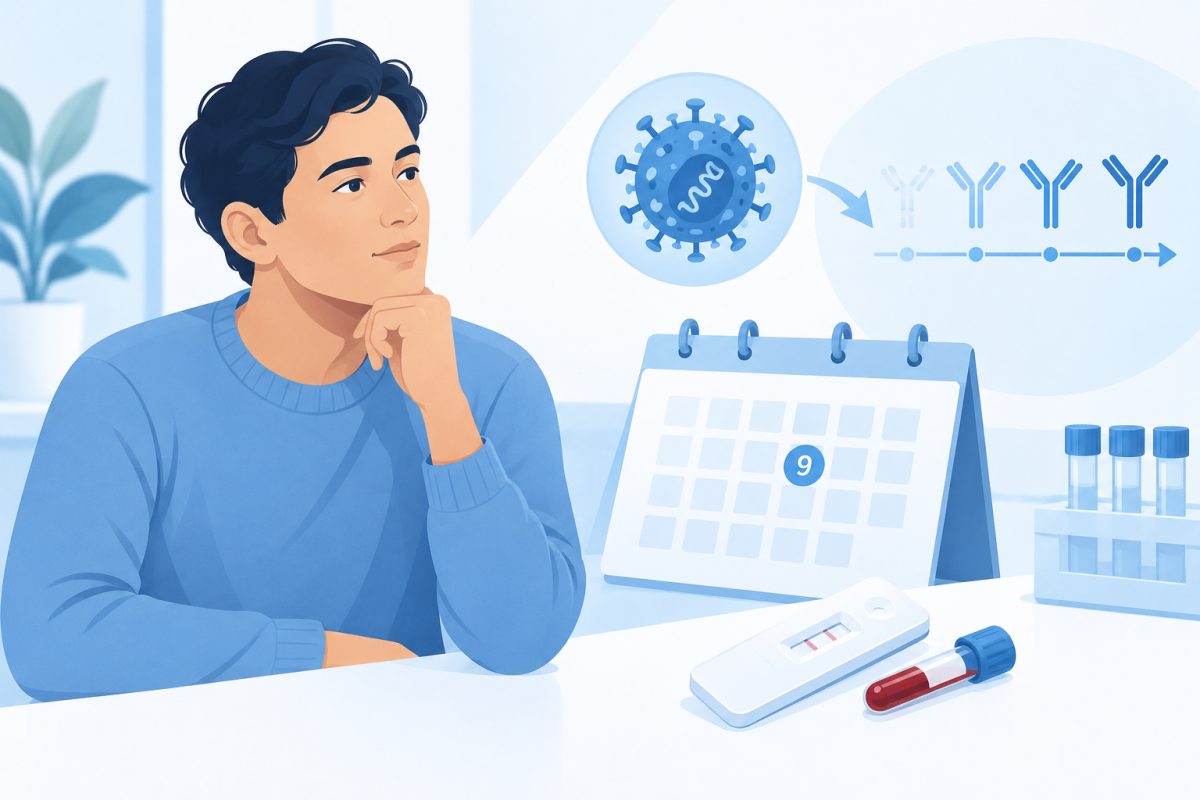
Understanding HIV Testing Timeline
The window period is the time between exposure to HIV and the point when a test can reliably detect the virus. Most antibody tests become positive within 3 to 4 weeks, but the most accurate detection—especially for early infection—occurs after 6 to 12 weeks. At 9 weeks (63 days) you are typically at the tail end of the window period, meaning many people will now test positive on a standard antibody test, but some may still be in the very early phase of infection.
The variability in individual immune responses means that while 9 weeks is a good benchmark, it is not a guarantee. Factors such as the type of exposure, the viral load of the source, and the person’s immune system can shift the detection window. Therefore, clinicians often recommend a repeat test after 12 weeks to confirm the result, especially if the initial test is negative but risk factors remain high.
What Happens at 9 Weeks Post-Exposure?
At 9 weeks, the body has usually produced enough antibodies for most rapid and ELISA tests to detect HIV. However, the sensitivity of these tests is not 100%; a small percentage of individuals may still yield a false negative. In such cases, a nucleic acid test (NAT) that detects viral RNA can identify infection earlier, but it is more expensive and less widely available.
If a test at 9 weeks comes back negative but the individual has ongoing risk behaviors or a known exposure, a repeat test at 12 weeks is advised. This second test reduces the chance of a false negative and provides a clearer picture of the person’s status. Clinicians also consider the presence of symptoms and other risk factors when interpreting results.
Choosing the Right Test: Rapid vs. Lab
Rapid antibody tests, which use a finger‑stick sample and give results in 15–20 minutes, are convenient for point‑of‑care settings. They are highly accurate after 6 weeks, making them suitable for a 9‑week check. Lab‑based ELISA tests, performed on venous blood, offer slightly higher sensitivity and are the gold standard for confirmatory testing.
For developers building health apps, integrating the Email API at odotservices.com.ng allows you to send test results and follow‑up instructions directly to patients. Coupling this with SMS alerts from odotservices.com.ng/pricing ensures timely communication, especially in regions where email access may be limited.
Practical Steps for Developers and Businesses
Start by verifying patient identity with the Identity verification service at odotservices.com.ng/communication-kyc. This protects against fraud and ensures that sensitive health data is linked to the correct individual. Next, set up automated reminders using the SMS service at odotservices.com.ng/pricing to prompt patients to attend their 9‑week appointment and to notify them of results.
Once results are available, use the Email API to send a secure, personalized email containing the test outcome and next steps. For patients who prefer mobile communication, trigger an SMS via the same account. This dual‑channel approach maximizes reach and compliance, especially in rural areas where internet connectivity may be spotty.
Supporting Patients with Technology
Build a simple dashboard that tracks each patient’s testing timeline, sends automated reminders, and stores results securely. Integrate the KYC service to keep records compliant with Nigerian health regulations. Use the free business tools at odotservices.com.ng/tools to generate invoices for lab fees, receipts for payments, and QR codes for easy access to patient portals.
By combining reliable testing protocols with robust tech infrastructure, developers and businesses can reduce the time between exposure and diagnosis. This not only improves individual health outcomes but also supports public health efforts to curb HIV transmission in Nigeria.
Timely HIV testing at 9 weeks is a critical step in early detection and treatment. By leveraging odotservices’ Email API, SMS, and KYC tools, you can build systems that deliver results quickly, keep patients engaged, and maintain compliance. Start today with the free business tools at odotservices.com.ng/tools and help make early HIV diagnosis a reality for communities across Nigeria.
Liked this? Get one practical business tip a week
Short, useful and written for Nigerian businesses: getting paid faster, reaching customers, staying compliant. No spam, and you can leave any time.
Keep reading
All articles Health
Effective Strategies for Kidney Detoxification
Kidneys play a crucial role in filtering waste from our bodies, but they can become overloaded. This blog explores effective strategies to support kidney detoxification.
 Health
The Silent Signs Your Body Is Begging You to Slow Down
In our fast-paced lives, we often ignore the signs our bodies give us to slow down. Understanding these silent signals can help us maintain productivity and well-being.
 Health
Why Regular Medical Check-Ups Could Save Your Life
Regular medical check-ups are essential for early detection of health issues. For developers and business leaders, staying healthy is key to productivity.
 Health
y Eating on a Budget: Affordable Nigerian Meals
Eating healthy doesn't have to be expensive. Explore budget-friendly Nigerian meals that are nutritious and easy to prepare.
Build with email, SMS and identity checks.
One account, one API, billed in Naira.


Comments 0
No comments yet. Be the first to share your thoughts.